Choosing a title company is one of the most important decisions in a Florida real estate transaction, but many buyers, sellers, and even Realtors do not always know what to ask before selecting one.
A title company does much more than schedule a closing. The right title company helps coordinate title searches, escrow, title insurance, closing documents, communication with lenders, recording, and the final transfer of ownership.
Because the title company plays such a central role, asking the right questions early can help prevent delays, avoid surprise fees, and create a smoother closing experience.
Here are 20 questions every buyer, seller, and Realtor should ask before choosing a title company in Florida.
1. What settlement fee do you charge?
This is one of the most important questions to ask because title company settlement fees can vary significantly.
In Florida, title insurance premiums are regulated, but many title company fees are not. Some companies may charge settlement fees, closing fees, processing fees, administrative fees, wire fees, courier fees, and document preparation fees.
At Sol Title, we offer a $0 settlement fee, helping buyers and sellers reduce certain closing-related costs while still receiving professional title and closing services.
To better understand how title fees work, read: Florida Title Insurance Rates Explained.
2. Are your title insurance premiums different from other title companies?
Many buyers and sellers assume they can shop title insurance premiums the same way they shop homeowners insurance or auto insurance.
In Florida, title insurance premiums are promulgated by the state. That means the title insurance premium itself should be the same from one licensed Florida title company to another for the same transaction amount.
Where consumers may see differences is in the additional fees charged by the title company.
This is why it is so important to compare the full closing cost estimate, not just the title insurance premium.
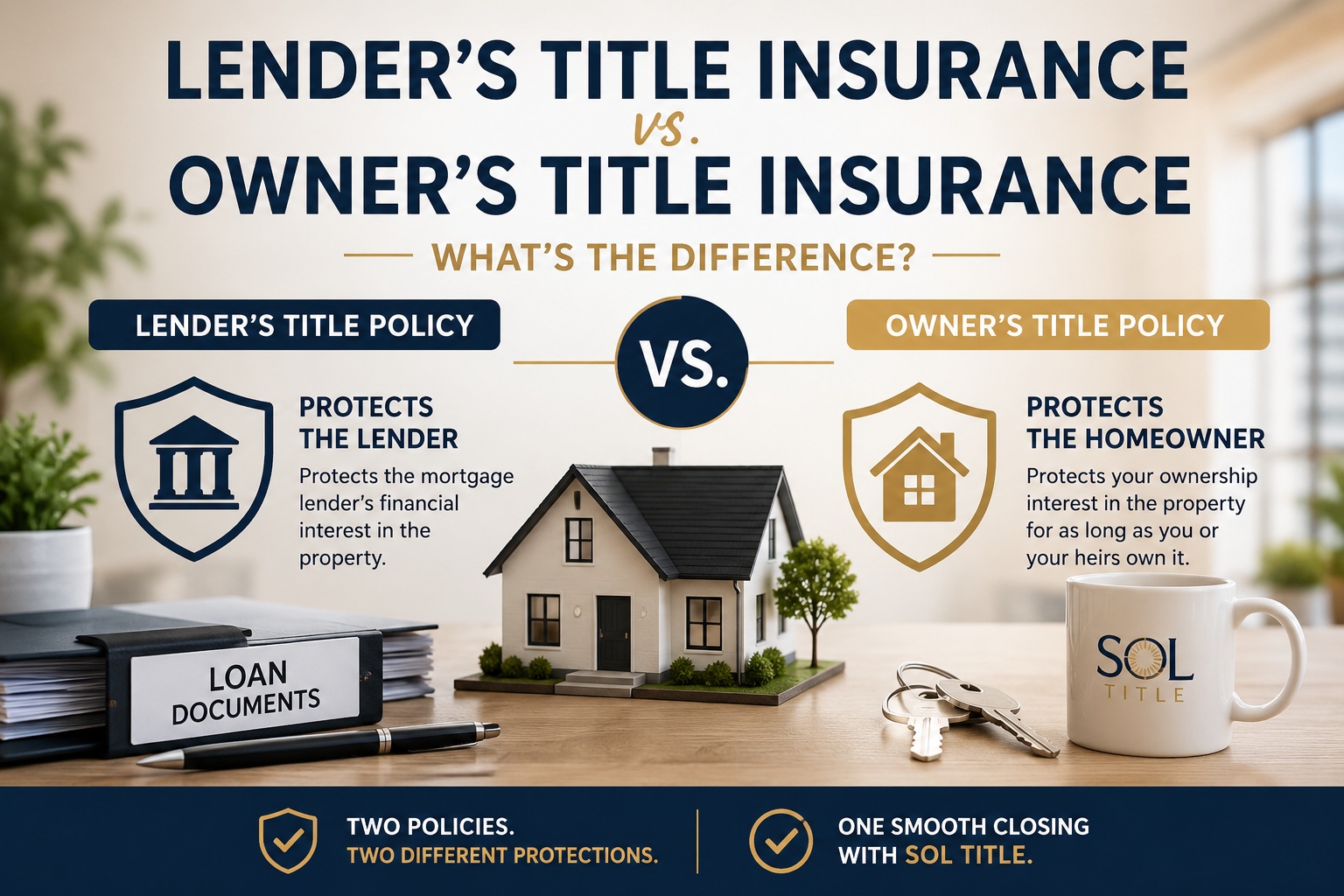
For a broader explanation, visit our guide: What Is Title Insurance For?
3. Can you provide a written estimate before closing?
Buyers and sellers should never have to wait until the closing table to understand the numbers.
A good title company should be able to provide a written estimate showing title-related fees, title insurance premiums, recording charges, documentary stamps, prorations, and other estimated closing costs.
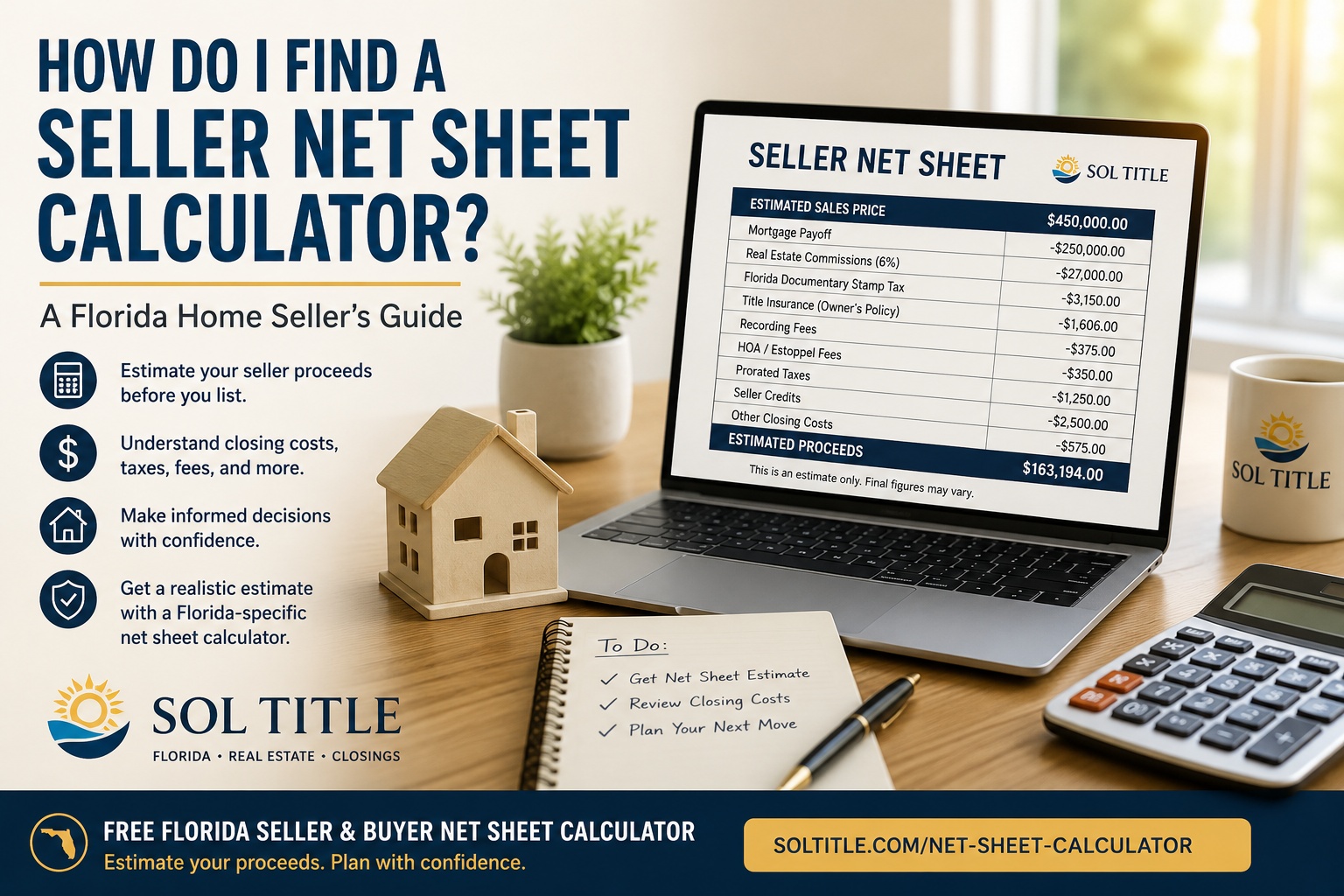
For sellers, this estimate is often called a net sheet. It helps estimate how much money the seller may walk away with after paying mortgages, commissions, taxes, fees, and other expenses.
Sol Title provides a free calculator that buyers, sellers, and Realtors can use before closing.
Use the Free Florida Seller & Buyer Net Sheet Calculator
4. How quickly do you open a title order after receiving a contract?
Timing matters. Once a contract is fully executed, the title company should receive it as soon as possible.
The title company needs the contract to open the file, begin the title search, coordinate escrow, and review important transaction details. Waiting too long to send the contract can create unnecessary delays.
This is especially important because the escrow deposit deadline is often one of the first major contract deadlines after ratification.
For more on why timing matters, read: The Ideal Contract Turnover Process.
5. How do you communicate with buyers, sellers, Realtors, and lenders?
Communication is one of the biggest differences between a smooth closing and a stressful one.
Before choosing a title company, ask how they communicate throughout the transaction. Do they provide regular updates? Who is the main point of contact? Can Realtors reach someone quickly if a deadline is approaching?
Strong communication helps prevent missed deadlines, confusion, duplicate requests, and last-minute surprises.
If you are a Realtor looking for tools and support during the transaction, visit Sol Title’s Realtor Resources page.
6. Do you offer mobile closings or remote signing options?
Modern real estate transactions often involve busy clients, out-of-state sellers, traveling buyers, investors, and clients who cannot easily come to a title office.
Ask whether the title company can coordinate mobile closings, mail-away closings, remote seller signings, or flexible signing options when needed.
This can be especially valuable when one party is out of state or when a closing needs to happen around a demanding schedule.
Learn more about this service here: Mobile Closings in Florida.
7. Are you experienced with the type of transaction I am closing?
Not every closing is the same.
A standard residential resale is different from a new construction closing, refinance, commercial transaction, vacant land purchase, investor transaction, estate sale, or FSBO sale.
Before choosing a title company, ask whether they regularly handle your type of transaction.
Sol Title assists with residential closings, refinance closings, new construction closings, commercial closings, builder transactions, investor transactions, and FSBO closings.
Related resources:
8. How do you handle escrow deposits?
Escrow deposits are a critical part of many Florida real estate contracts.
Ask the title company how deposits are received, how quickly they are processed, and what instructions buyers should follow to avoid errors or delays.
Clear escrow instructions help protect all parties and reduce confusion during the first few days after contract execution.
Buyers should always verify wiring instructions directly with the title company before sending funds.
9. What wire fraud protection procedures do you use?
Wire fraud is one of the most serious risks in a real estate transaction.
Before sending money, buyers should confirm wiring instructions using a trusted, verified phone number. Realtors should also remind clients never to rely solely on emailed wiring instructions without verbal confirmation.
A title company should have clear procedures for wire instructions, identity verification, secure communication, and fraud prevention.
While no system can eliminate every risk, strong communication and verification procedures can significantly reduce exposure.
10. Do you help explain the closing statement?
Many buyers and sellers receive a settlement statement or closing disclosure and have no idea what most of the line items mean.
A good title company should be willing to explain title charges, prorations, recording fees, tax credits, payoff items, escrow amounts, and other settlement statement entries.
This is especially important for first-time buyers, out-of-state sellers, investors, and clients who are unfamiliar with Florida closing customs.
For a helpful overview, read: What Are Closing Costs? A Florida Home Buyer’s and Seller’s Guide.
11. Who Will Actually Be Handling My Closing?
Not every title company operates the same way. Some assign one closer to your transaction from start to finish, while others may have multiple people handling different parts of the process.
Ask who your primary point of contact will be and whether you’ll have direct access to them throughout the transaction. Knowing who is responsible for your file can make communication much easier if questions arise before closing.
12. What Happens If a Title Problem Is Found?
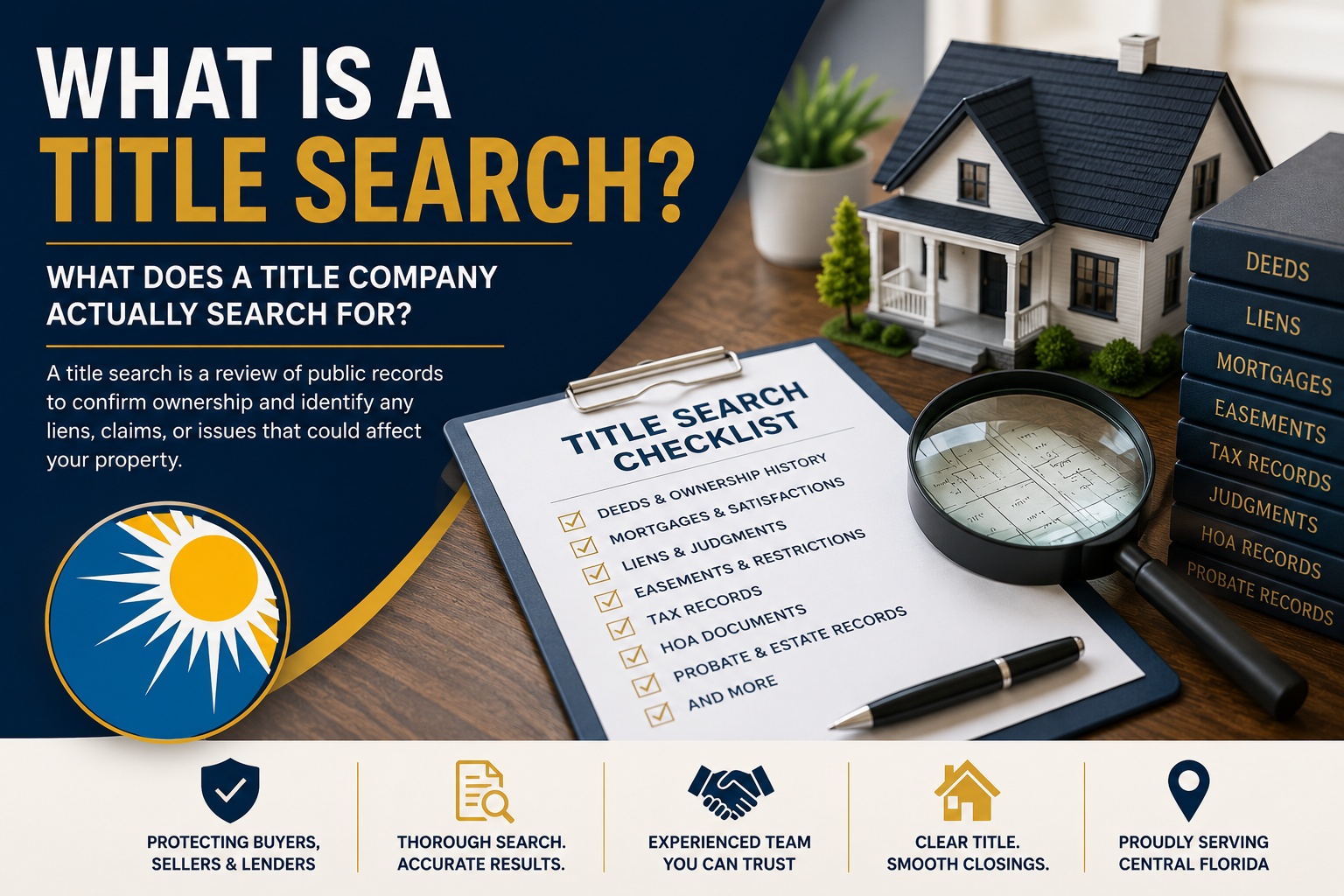
Even well-maintained properties can have title issues that need to be resolved before closing. These may include unreleased mortgages, judgments, liens, probate matters, missing heirs, recording errors, or ownership discrepancies.
Ask how the title company handles these situations and whether they proactively work with lenders, attorneys, Realtors, and the parties to resolve problems before closing.
To better understand what a title company does throughout the transaction, read What Does a Title Company Do in Florida?.
13. Do You Perform Municipal Lien Searches?
Municipal lien searches can uncover issues that may not appear during a standard title search, including code enforcement matters, unpaid utility balances, open permits, and municipal assessments.
Ask what searches are included with your transaction and whether additional searches are recommended based on the property type or location.
Open permits are one example of an issue that can raise questions during a real estate transaction.
Related reading: Open Permits in Florida: How They Affect Title, Closing, Disclosure, and Title Insurance.
14. Can I Choose My Own Title Company?
Many buyers are surprised to learn they often have a say in choosing the title company. While local customs and contract negotiations vary, buyers and sellers should understand that they may have options depending on the transaction.
Choosing a title company based on service, communication, experience, and value—not simply convenience—can make a significant difference in the closing experience.
Read more: Can I Choose My Own Title Company in Florida?.
15. How Long Does the Title Search Usually Take?
Most title searches begin shortly after the fully executed contract is received. The exact timeline varies depending on the complexity of the property, prior ownership history, and whether title issues are discovered.
A title company should be able to explain its typical turnaround time and keep all parties informed throughout the process.
16. Will You Explain My Title Commitment?
Many buyers receive a title commitment without understanding what it means. A quality title company should be willing to explain the commitment, including requirements that must be satisfied before closing and exceptions that may remain after closing.
Understanding your title commitment before closing helps eliminate surprises on closing day.
17. Do You Have Educational Resources for Buyers, Sellers, and Realtors?
A title company should be more than a place to sign documents. The best companies educate their clients throughout the transaction.
Look for companies that publish articles, videos, calculators, FAQs, and Realtor resources to help clients better understand the closing process.
Helpful resources include:
18. How Will You Help Keep My Closing on Schedule?
Every transaction has important deadlines. A proactive title company works closely with Realtors, lenders, buyers, sellers, and transaction coordinators to help ensure required documents, deposits, and information are received on time.
Strong communication often prevents small issues from becoming major closing delays.
Related reading: The Ideal Contract Turnover Process.
19. What Makes Your Title Company Different?
This question often reveals the biggest differences between title companies.
Some companies focus primarily on volume. Others emphasize communication, education, technology, flexibility, and customer service.
At Sol Title, our philosophy is simple:
- $0 Settlement Fee
- Transparent communication
- Educational resources for buyers, sellers, and Realtors
- Mobile closing options
- Modern technology
- Experienced professionals working together from contract to closing
20. Why Should I Trust Your Title Company With My Closing?
Buying or selling a home is often one of the largest financial transactions people ever complete.
The title company you choose should be one that communicates clearly, answers questions honestly, protects your interests throughout the closing process, and provides the resources you need to make informed decisions.
Rather than focusing solely on price, consider experience, communication, transparency, educational resources, and overall customer service when selecting your title company.
Frequently Asked Questions
What questions should I ask before choosing a title company?
Ask about settlement fees, communication, title insurance, escrow handling, title searches, mobile closings, title issue resolution, closing timelines, educational resources, and overall customer service.
Can buyers choose their own title company in Florida?
Depending on the contract and negotiations, buyers and sellers may have the ability to choose the title company. Understanding your options before signing the contract is important.
Are title insurance premiums the same in Florida?
Florida title insurance premiums are promulgated by the state. However, additional title company fees may vary.
Why is communication so important during a closing?
Good communication helps prevent missed deadlines, keeps all parties informed, and often leads to a smoother closing experience.
Additional Resources
- What Does a Title Company Do in Florida?
- What Is Title Insurance?
- Florida Title Insurance Rates Explained
- What Are Closing Costs?
- Florida Seller & Buyer Net Sheet Calculator
- Realtor Resources
- Mobile Closings
- New Construction Closing Costs
- Can I Choose My Own Title Company?
- Open Permits in Florida
Areas Served
Sol Title proudly serves buyers, sellers, investors, builders, lenders, and Realtors throughout Central Florida and across the state, including Clermont, Minneola, Groveland, Montverde, Mascotte, Howey-in-the-Hills, Leesburg, Mount Dora, Tavares, Eustis, Umatilla, Lady Lake, Yalaha, Winter Garden, Windermere, Oakland, Ocoee, Davenport, Lake County.
Whether you’re buying your first home, selling an investment property, refinancing, or closing on new construction, Sol Title is committed to providing transparent communication, experienced guidance, and a smooth closing experience from contract to keys.
Ready to estimate your closing costs? Use our Free Florida Net Sheet Calculator, learn more about Florida title insurance, or contact Sol Title to discuss your next closing.