
Buying a home comes with a lot of paperwork, and one of the most common questions buyers ask is:
“Why am I paying for title insurance?”
The simple answer is that there are two common types of title insurance policies in a real estate closing: a lender’s title insurance policy and an owner’s title insurance policy.
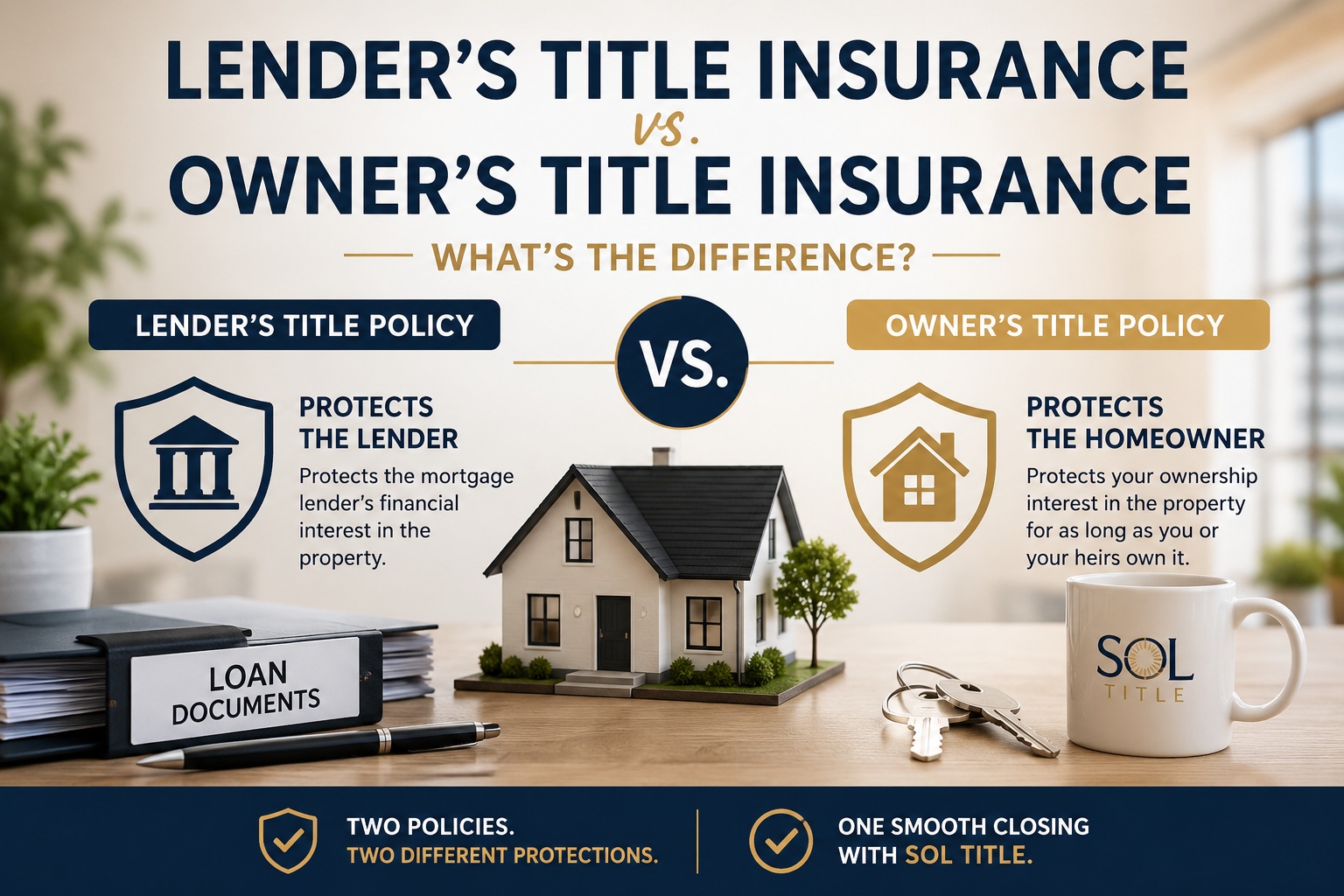
They may sound similar, but they protect two different parties. A lender’s title policy protects the mortgage lender, while an owner’s title policy protects the homeowner.
What Is a Lender’s Title Insurance Policy?
A lender’s title insurance policy protects the mortgage company or lender that is financing the home purchase.
If a title issue is discovered after closing, the lender’s policy is designed to protect the lender’s financial interest in the property, subject to the terms of the policy.
Common title issues may include:
- Unknown liens
- Recording errors
- Clerical mistakes
- Forged documents
- Undisclosed heirs
- Other covered title defects
Most mortgage lenders require a lender’s title policy whenever a buyer is financing the purchase. If you are paying cash, a lender’s policy is generally not required because there is no mortgage lender involved.
What Is an Owner’s Title Insurance Policy?
An owner’s title insurance policy protects the homeowner’s ownership interest in the property.
Unlike the lender’s policy, which protects the bank, the owner’s policy is designed to protect you as the buyer.
If a covered title issue appears after closing, an owner’s policy may help defend your ownership rights or cover certain financial losses, subject to the terms and conditions of the policy.
For many homeowners, title insurance is protection they hope they never need, but are glad to have if a title issue appears years later.
Lender’s Title Policy vs. Owner’s Title Policy
| Lender’s Title Policy | Owner’s Title Policy |
|---|---|
| Protects the mortgage lender | Protects the homeowner |
| Usually required when financing | Usually optional, but commonly recommended |
| Protects the lender’s financial interest | Protects the buyer’s ownership interest |
| Typically ends when the loan is paid off | Generally continues as long as you or your heirs own the property, subject to policy terms |
Why Do Buyers Often Confuse the Two?
Buyers often confuse lender’s title insurance and owner’s title insurance because both policies are usually issued during the same closing.
However, they are not duplicate policies. They protect different parties.
The lender’s policy protects the lender. The owner’s policy protects the homeowner.
Do You Need Both Policies?
If you are financing your home purchase, your lender will typically require a lender’s title insurance policy.
The owner’s title insurance policy is generally optional, but many buyers choose it because a home is often one of the largest investments they will ever make.
If you are paying cash, you usually will not need a lender’s policy, but you can still purchase an owner’s title insurance policy to protect your ownership interest.
Is Title Insurance Paid Monthly?
No. Title insurance is generally a one-time premium paid at closing.
This is different from homeowners insurance, which is usually paid annually or monthly. With title insurance, there are generally no monthly payments after closing.
Why the Title Search Matters
Before a title insurance policy is issued, the title company performs a title search. This includes reviewing public records to identify matters that may affect ownership, such as recorded liens, mortgages, judgments, easements, or other title concerns.
The goal is to identify and resolve issues before closing whenever possible.
You can learn more in our related article: What Is Title Insurance?
How Sol Title Helps Buyers and Sellers
At Sol Title, we believe informed buyers make more confident decisions.
Our team works with buyers, sellers, REALTORS®, lenders, and builders to help make the closing process clear, organized, and efficient.
Whether you are reviewing closing costs, comparing title insurance policies, or preparing for closing day, Sol Title is here to help.
Helpful resources:
- What Are Closing Costs?
- What Is the Best Day to Close on a House?
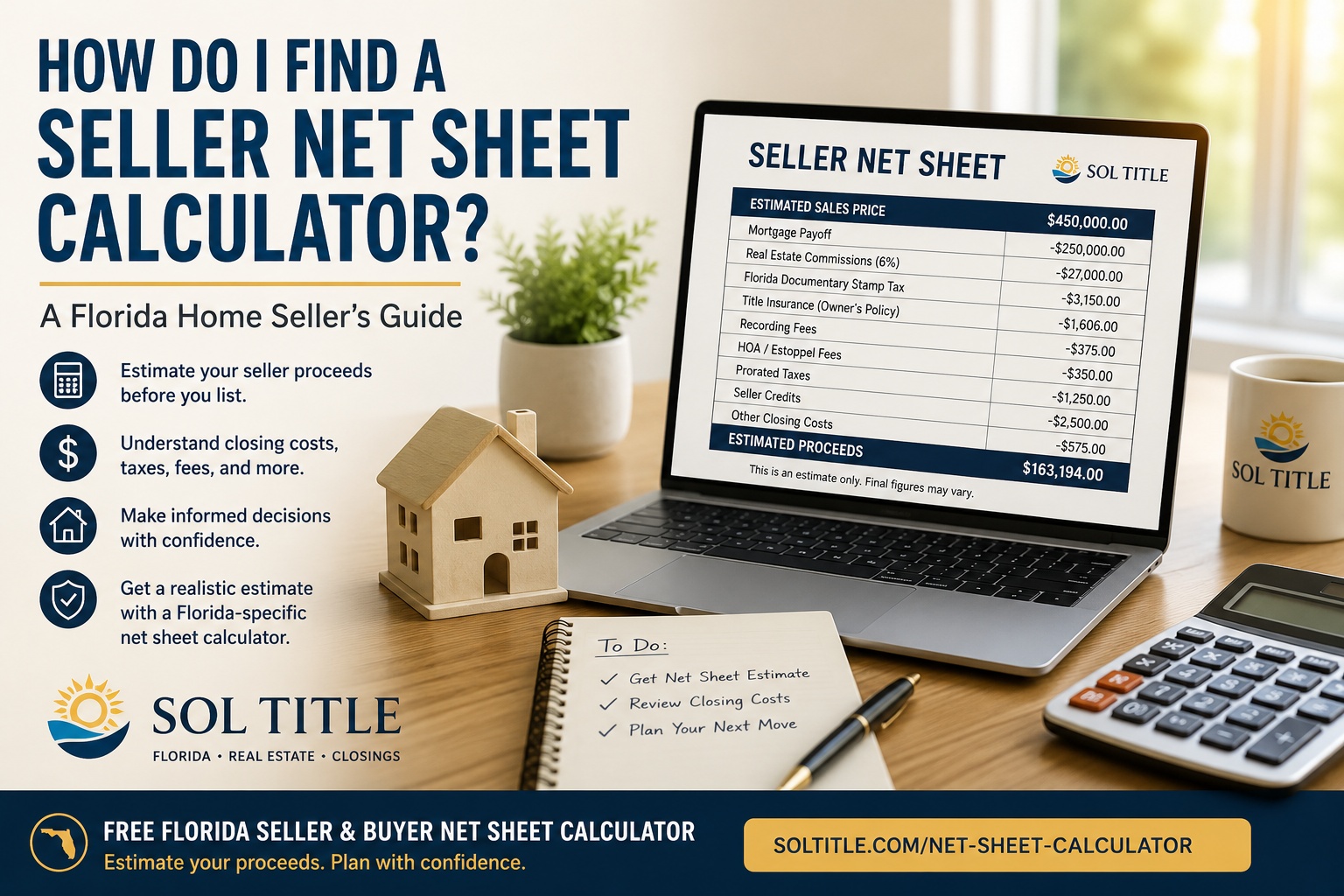
- Florida Seller Net Sheet Calculator
- Mobile Real Estate Closings
- Realtor Resources
Areas We Serve
Sol Title proudly serves buyers, sellers, REALTORS®, lenders, and builders throughout Lake County and Central Florida.
- Clermont Title Company
- Minneola Title Company
- Groveland Title Company
- Montverde Title Company
- Mount Dora Title Company
- Tavares Title Company
- Eustis Title Company
- Leesburg Title Company
- Mascotte Title Company
- Lady Lake Title Company
- Umatilla Title Company
- Howey-in-the-Hills Title Company
- Yalaha Title Company
- Winter Garden Title Company
- Windermere Title Company
- Oakland Title Company
- Davenport Title Company
Frequently Asked Questions
What is the difference between a lender’s title policy and an owner’s title policy?
A lender’s title policy protects the mortgage lender’s financial interest in the property. An owner’s title policy protects the homeowner’s ownership interest, subject to the terms of the policy.
Is lender’s title insurance required?
Usually yes, if you are financing the purchase with a mortgage. Most lenders require a lender’s title insurance policy as part of the closing process.
Is owner’s title insurance required?
Owner’s title insurance is generally optional, but many buyers choose it because it protects their ownership interest in the property.
Who does a lender’s title policy protect?
A lender’s title policy protects the lender, not the buyer. It is designed to protect the lender’s financial interest in the property.
Who does an owner’s title policy protect?
An owner’s title policy protects the homeowner’s ownership interest, subject to the terms and conditions of the policy.
Is title insurance a monthly payment?
No. Title insurance is generally paid as a one-time premium at closing, not as a monthly payment.





One Response